


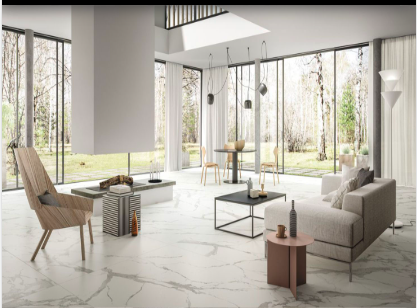


Why Designers Turn to Marble for Sculptural Architecture
.png)
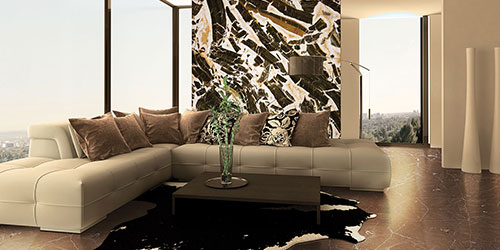
Why do certain spaces carry a sense of quiet permanence, as though they were carved into place instead of constructed in layers? The answer often lies in how form is conceived, and in the material chosen to hold that form. Architecture becomes sculptural when form is treated as mass rather than surface. When staircases are conceived as solid volumes rather than assembled components, when depth and shadow are designed into the structure itself, the space begins to feel shaped rather than layered. To achieve this, the choice of material becomes critical.
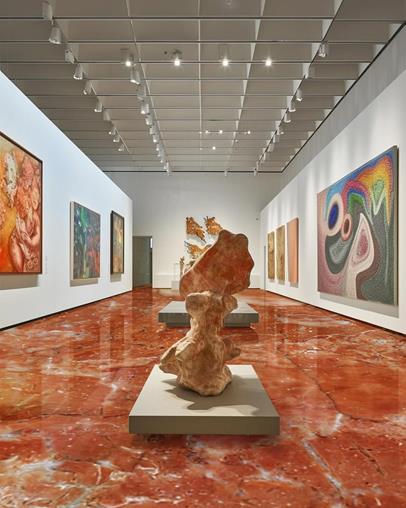
Marble lends itself naturally to this sculptural form. It holds density without appearing blunt. When used in reduced thickness, it behaves as a finish. When used with intention and thickness, it becomes structure and volume. Its fine grain allows it to be profiled, fluted, carved or curved with control. Its veining introduces movement within solidity, preventing large forms from feeling static.

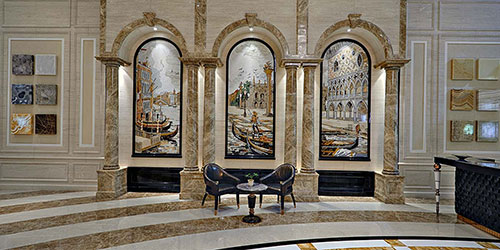
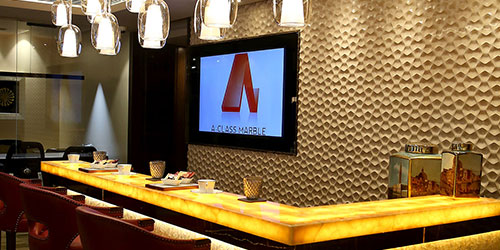
In interior applications, this often begins with the wall. Instead of flat panelling, stone is articulated with shallow ribs or continuous slabs that wrap corners without visible interruption.
The success of such gestures depends on early coordination. Slab size, vein direction, and joint alignment must be resolved before fabrication. Depth requires thickness; carving demands structural allowance. Edges are eased to reduce fragility and to ensure the form reads as deliberate rather than decorative.
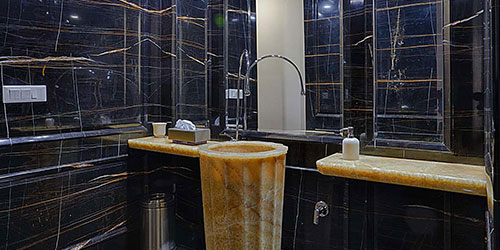
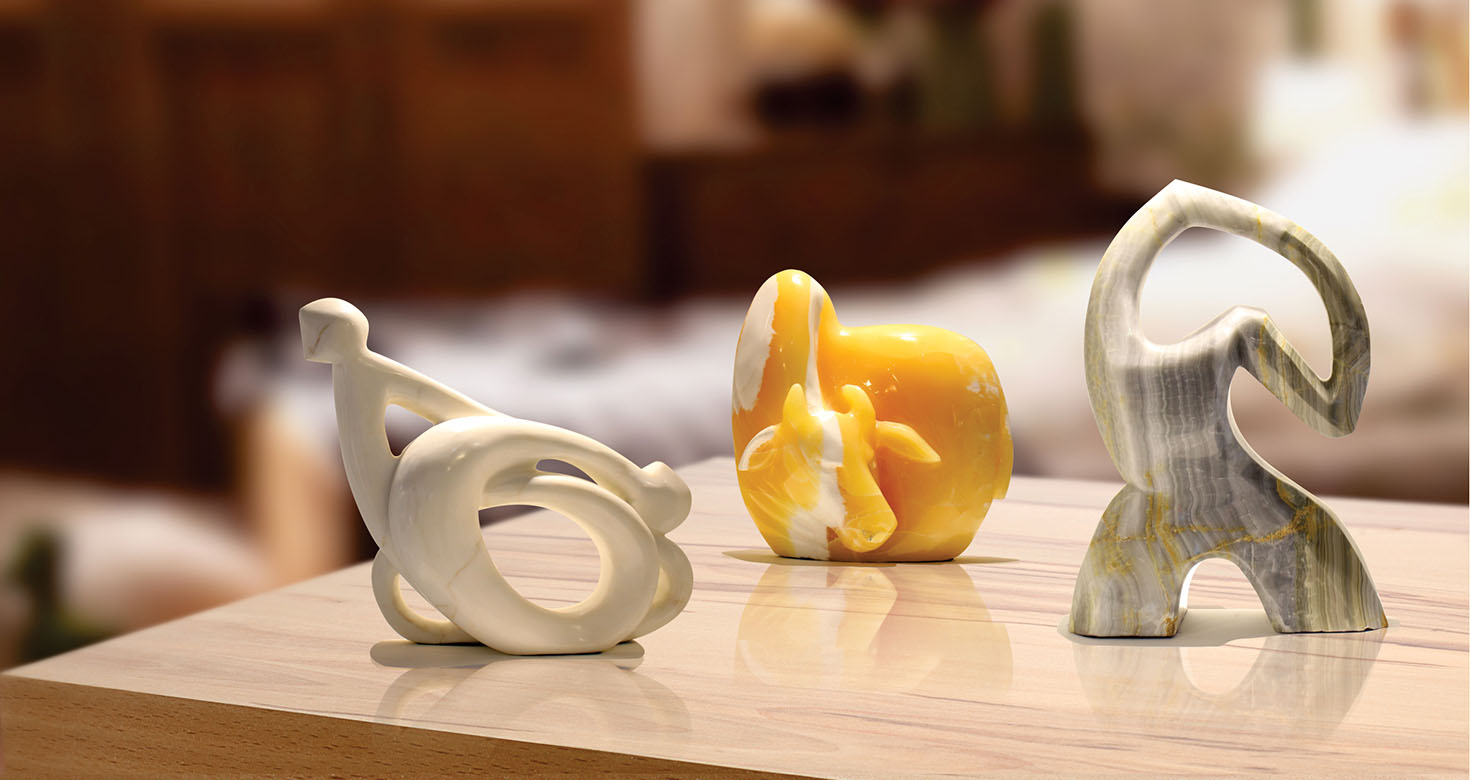
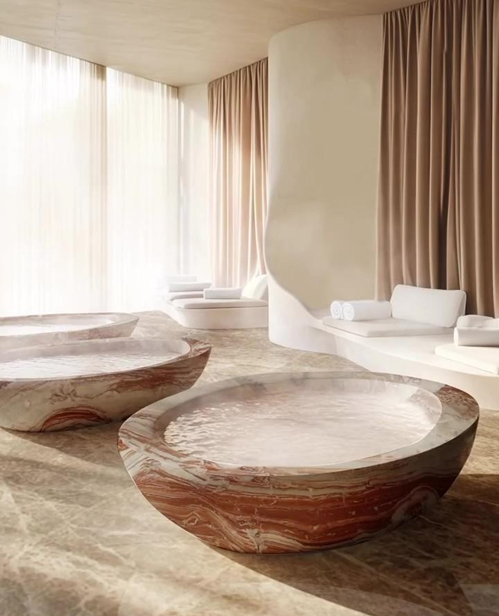
Furniture extends the same thinking at a more intimate scale. A table that appears monolithic, a console that rises directly from the floor, or a basin carved from a single block shifts the perception of a room. These pieces demand restraint in proportion. Marble performs well under compression but is heavy, so load-bearing capacity and anchoring are essential considerations, particularly in upper-level residences. Where necessary, internal reinforcement or engineered cores are introduced to reduce weight while preserving the visual integrity of mass.
.png)
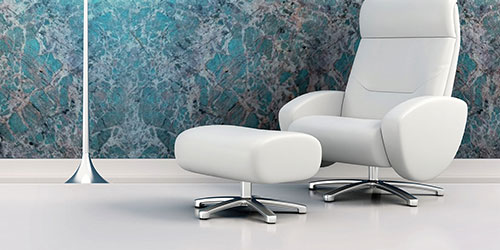
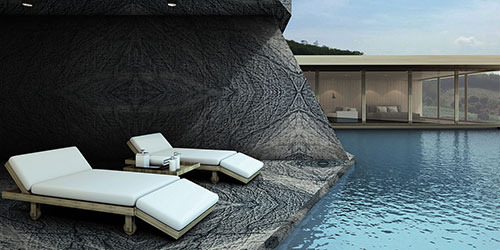
Material selection further shapes the outcome. Marble remains suitable for carved and profiled work due to its relative workability, though its porosity requires sealing in areas exposed to moisture or food. Granite offers greater hardness and abrasion resistance, making it suitable for bold, planar forms and heavily used surfaces, though it resists intricate detailing. Quartzite balances durability with refined patterning, making it appropriate where sculptural clarity must also withstand daily wear.
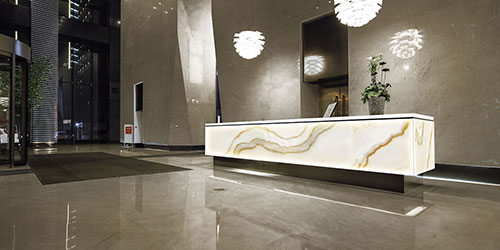
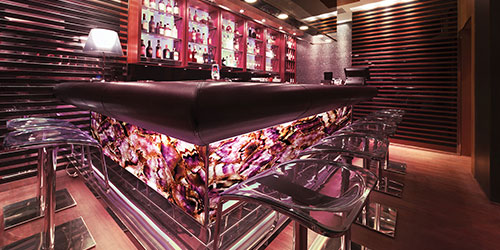
Ondulutu Onyx introduces a different dimension altogether. Its translucency allows light to pass through the stone, transforming mass into illumination. Backlit panels or partitions create depth without excess detail. Because Michel Onyx is more delicate, it requires careful reinforcement and evenly distributed lighting to avoid stress or heat concentration. Used selectively, it softens otherwise dense compositions and introduces atmosphere within solid form.
Translucency, however, is not limited to onyx. Some marble, such as Angelo White and Angelo Fiore, also allow light to pass through due to their crystalline structure. The effect is softer and more subtle, creating a gentle glow rather than a dramatic highlight. As with onyx, slab thickness and lighting need careful planning to ensure consistent illumination and long-term stability.

Tactility remains central to sculptural work. A honed finish tempers reflection and allows large surfaces to settle visually within a room. Textured treatments deepen shadow and improve grip underfoot. Slightly rounded edges at stair treads, counters, and seating plinths extend longevity and comfort. These are measured decisions, yet they define how architecture is experienced up close.
Sculptural architecture depends on material that can sustain depth without collapsing into decoration. Marble endures because it allows restraint without loss of presence. It can be shaped into clear, resolved forms that feel integral rather than applied. When structure and maintenance are carefully considered, marble is not merely an embellishment. It becomes the element that anchors space, giving it weight and a sense of having been shaped with intent.


Sitemap
- Newsletter
- Catalouge
- Gallery
- Legal & Privacy
- Career
- Share
- Media
- News & Events
- Press Coverage
- Blogs
- Awards
- Signature
- Bianco Snow White
- Bronze Amani
- Afyon White
- Jasper Gold
- Kilimanjaro white
- Mexican Gold
- Statuario
- Pristine
- Pink Michel Angelo
- Ariston white
- Bianco Covelano
- WHITE CHIANTE
- Carrara white
- Lilac White
- Blue o Bisuai
- Classique
- Royal Crema
- SARDANIYA BEIGE
- Perlato Royal
- Extra Light
- Imperial Beige
- Light Emperador
- De Martino
- Virtual Applicator
- Kitchen
- Bathroom
- Bedroom
- Clientele
- Clients
- Testimonial
- Melange
- Sequia Brown
- Amazing silver
- Pisato
- Enigma
- Metal Rust
- Moroccan Black
- Nsl Black
- Umber
- BEIGE TRAVERTINO
- TITANIUM TRAVERTINO
- SILVER TRAVERTINO
- Exotica
- Azul Pink
- Azul Macaubas
- Azul Skyline
- Opera
- Zade Green onyx
- zebra onyx
- Sunrise Onyx
- Bejewel
- Smokey Quartz
- Rose Quartz
- Red Agate
- Avant Garde
- maxican wave
- Matrix hydro finish
- Bianco Moon Face
